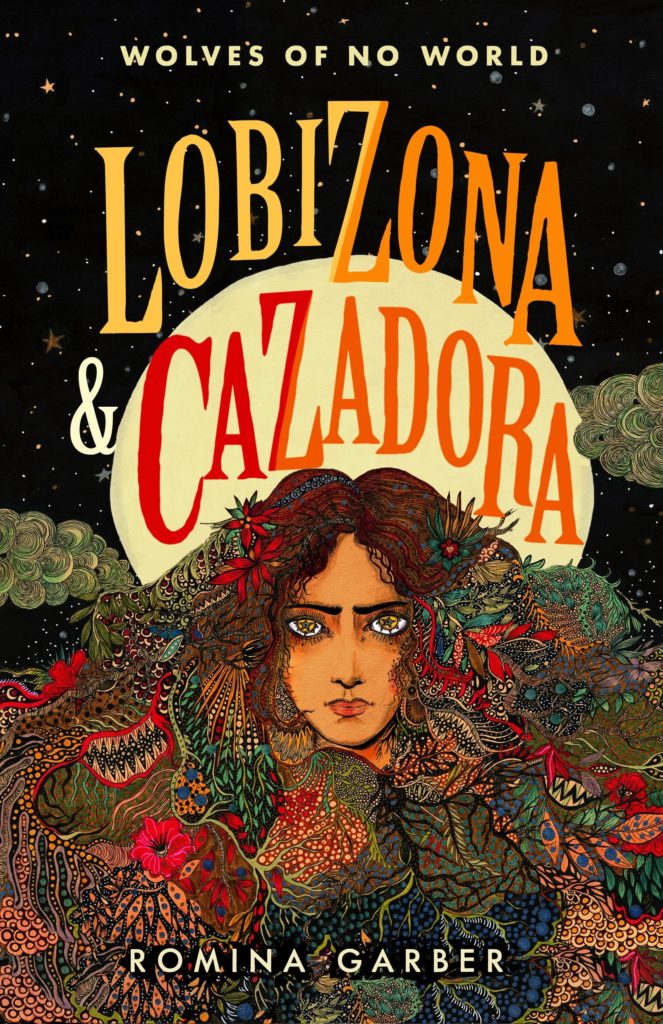
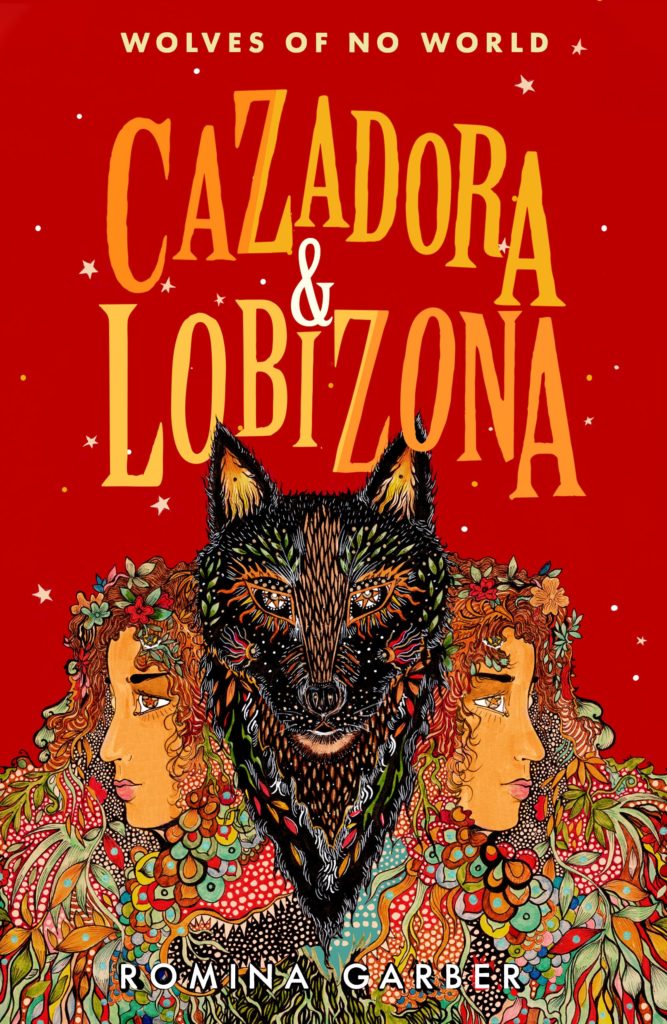
So excited to be able to feature this interview with Romina Garber author of Wolves of No World. I read these when they first came out, but now there’s this special packaging together! It’s gorgeous and I adore both of these books!
Summary
In Lobizona, Manuela Azul has been crammed into an existence that feels too small for her. As an undocumented Argentine immigrant on the run from her father’s crime-family, Manu is confined to a small apartment and a small life in Miami, Florida. But now, her surrogate grandmother has been attacked, lifelong lies have been exposed, and her mother is arrested by ICE. Without a home, without answers, and finally without shackles, Manu falls into a secret world buried beneath her own. A world straight out of Argentine folklore, where the seventh consecutive daughter is born a bruja and the seventh consecutive son is a lobizón, a werewolf. A world where her unusual eyes allow her to belong.
In Cazadora, Manu and her friends cross the mystical border into Kerana―a cursed realm in Argentina―searching for allies and a hiding place. As they chase down leads about the mythical resistance that might not even exist, the Cazadores set up traps to capture Manu. Soon, Manu and her friends are rescued by the resistance, and she realizes they need a revolution as much as she does. But is she the right one to lead them? And after running this far, for this long―how much farther can Manu go before she stops to take a stand?
Find Wolves of No World on Amazon, Bookshop, & Blackwells.
Interview
LOBIZONA was published in 2020, how do you think the release in 2020 differs from this new box set in 2026?
This 2-in-1 edition unites Lobizona and Cazadora in a single tome, which suits the storyline perfectly: Cazadora starts with the physical act of Manu crossing the border into a hybrid human-Septimus world. So, it’s especially fitting that when you finish Lobizona, you have to physically flip the book over and turn it upside down to begin part two. This action mirrors what’s happening in the story, since Manu’s entire universe is being flipped upside-down . . .
Can you introduce us to these fabulous side characters and how you approached world building through their stories?
Two of my favorite supporting characters in Wolves of No World are Cata and Saysa. I love the way they evolve throughout the books. Through their characters, I hoped to convey that even Septimus who seem to fit in—from the outside, at least—are in fact still being excluded and “othered” in a binary system that doesn’t allow for nuance. I especially love that they have such staunchly different viewpoints on feminism and what Manu should do next, which adds shades of gray to their black-and-white way of life.
Your road to publication has been a long stretch from 2008 to 2020, can you talk us through some of the challenges and how did you maintain your sense of hope throughout it all?
Before landing my first contract, I wrote five novels that were all rejected. It took me eight and a half years to get published, and I definitely lost hope at times, even going through periods when I was too blocked to write . . . but I always found my way back to the page.
Even if my stories didn’t get published, I still wanted to write them. If you feel the same way, then you’re a writer, too, and no one—not even the gatekeepers—can take that away from you.
A major theme in this duology is further breaking down this rigid dichotomy of lobizón and bruja. Did you always envision this exploration and when you were setting out the framework for this duology, were there pieces of this theme that had to be moved around? For the series as a whole was it inspiration and the themes which emerged or visa versa?
I based the fantasy elements on an ancient superstition that claims the seventh consecutive son will be a lobizón, or a werewolf, and the seventh daughter a bruja. Manu breaks that binary by being the first ever lobizona.
I always envisioned that Lobizona would be about Manu trying to find her place in the world(s), and Cazadora would be about the world trying to find a place for Manu. Where book 1 approaches the Septimus from an outsider’s perspective, book 2 takes us to the heart of their culture, where we realize that the “rigid dichotomy” (as you describe it) of the system results in too many Septimus feeling ostracized and unsafe. That’s why when she arrives at the Coven, Manu finds she’s joining a multi-generational struggle and encounters a wide array of identities that push against the boundaries of the Septimus system.
Identity is obviously another huge theme in this duology. How did you set out to use a fantasy lens to talk about identity and why are you drawn to the fantasy genre?
There’s a moment in Lobizona when Manu asks Perla, her surrogate grandmother, why so many Latin American authors employ magic in their stories. Perla says, “Sometimes reality strays so far from what’s rational that we can only explain it through fantasy.”
I find that Fantasy and Sci Fi are ideal genres for communicating controversial and potentially polarizing ideas because they allow us to allegorize the world, so we can tackle sensitive subjects by removing their charge.
I’ve always said that I see stories as empathy incubators. My hope as a YA author is to awaken in teens the realization that they have the power to revolutionize our worlds.
While you discuss rebellion, you also have this fierce framework of friendship. Can you talk about how your characters envision rebellion, friendship, and community all in this action packed world?
I wanted to explore the idea that rebellion isn’t just about destroying a faulty system; it’s also about deciding what kind of world you build afterward. All the magic and fighting scenes are exciting, but they only matter to us because we care about the characters. The message of these books is that no one can dismantle injustice alone, and we need to work together if we’re going to stop trying to fit into an outdated system and start modifying that system to fit us.
About Romina Garber
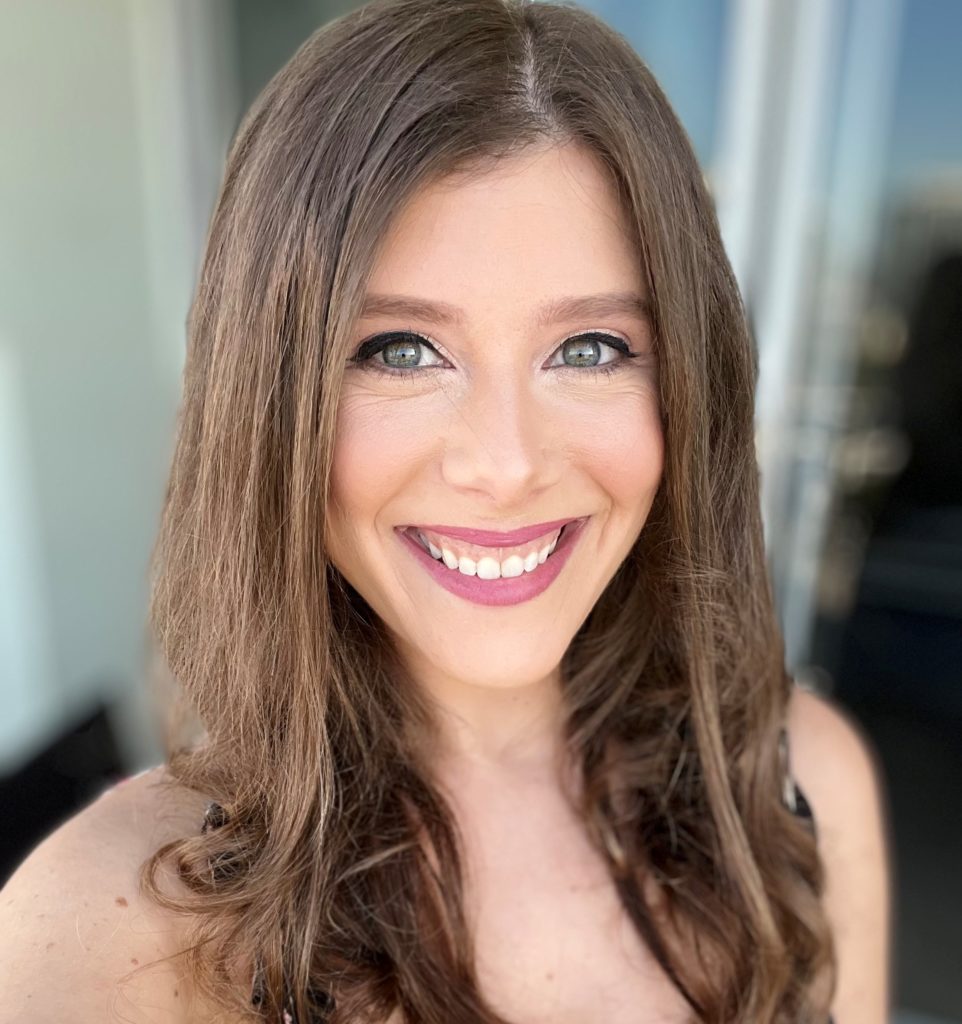
Romina Garber is a New York Times and international bestselling author whose books include The Last Vampire, Castle of the Cursed, Lobizona, Cazadora, & the ZODIAC quartet. Born in Buenos Aires, Argentina, and raised in Miami, Florida, Romina landed her first writing gig as a teen—College She Wrote, a weekly Sunday column for the Miami Herald that was later picked up for national syndication—and she hasn’t stopped writing since. She is a graduate of Harvard College and a Virgo to the core.